
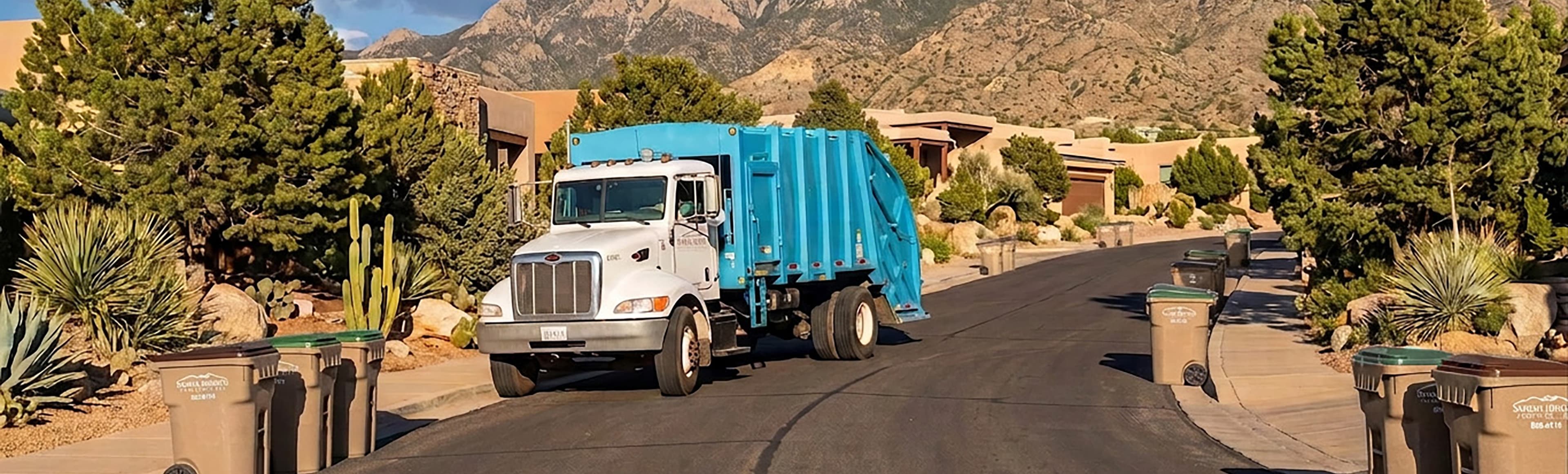
Sandia Heights Sanitation
Regulated Waste
Sandia Heights Services does not collect e-waste, hazardous waste, or biomedical waste — but provides guidance to help residents dispose of these materials safely and legally.
Sandia Heights Services does not collect e-waste, hazardous waste, or biomedical waste. The company provides the following information to guide proper disposal methods to protect the environment and public health.
E-Waste
E-waste encompasses discarded electrical or electronic devices including computers, phones, televisions, printers, and appliances. These items can contain hazardous materials like lead, mercury, and cadmium that pose environmental and health risks without proper recycling.
Hazardous Waste
Household Hazardous Waste (HHW) refers to products commonly found in homes that contain toxic, flammable, corrosive, or reactive substances. Examples include:
- Cleaning products (bleach, ammonia, drain cleaners)
- Pesticides and herbicides
- Paints and solvents
- Automotive fluids (motor oil, antifreeze)
- Batteries (rechargeable, lithium, car batteries)
- Household chemicals (aerosols, varnishes, adhesives)
Improper disposal can contaminate water supplies and harm wildlife. Hazardous waste pickup is not available through Sandia Heights Services.
Household Hazardous Waste Disposal →
Bio-Medical Waste
Biomedical waste originates from healthcare settings and includes used syringes, bandages, surgical gloves, and blood bags contaminated with bodily fluids or pathogens. Such waste must be disposed of in a way that prevents infection, contamination, or injury. Bio-medical waste pickup is unavailable through Sandia Heights Services.
Pharmaceutical Waste
Pharmaceutical waste includes expired medications, unused prescriptions, contaminated packaging, and recalled medications. Due to potential toxicity, proper disposal is essential to avoid harm to people and ecosystems. Pharmaceutical disposal information is covered in the Bio-Medical Waste section.