
Sandia Peak Utility Company
Customer Water Line Survey
Identify the material of your service line pipes and submit your findings to help Sandia Peak meet New Mexico Environmental Department requirements.
Sandia Peak Utility Company is dedicated to safeguarding your health from the harmful effects of lead pipes. In accordance with regulations, water system providers must now determine the materials of service line pipes leading to residences. As some of these pipes traverse private property, we kindly ask for your assistance in identifying the material of your outdoor pipes by completing our survey. This inventory specifically focuses on outdoor pipes and excludes indoor ones.
To clarify, SPUC conducts lead sampling from our water system every three years, historically without encountering lead contaminants. This survey is essential for gathering data mandated by the New Mexico Environmental Department to compile a statewide inventory of existing lead pipes. For further insights, please refer to our Annual Water Quality Report.
Drinking water pipes leading to your home can be constructed from various materials, including copper, PVC plastic, galvanized metal, or lead. If your property's pipes are made of lead or galvanized metal that may have been exposed to lead, there's a risk of lead corrosion contaminating your drinking water. Hence, determining your pipes' material is crucial for assessing lead exposure. If your property does have lead or previously exposed galvanized pipes, replacing them in accordance with regulatory guidance is recommended to minimize lead exposure.
What Are Water Service Lines?
A water service line is the pipe that carries water underground from a water main or well into a building. Water service lines can be made of a variety of materials: copper, plastic, galvanized or lead. The service line could also be a mix of several types, especially if repairs have been made to the line at different times in the building's history.
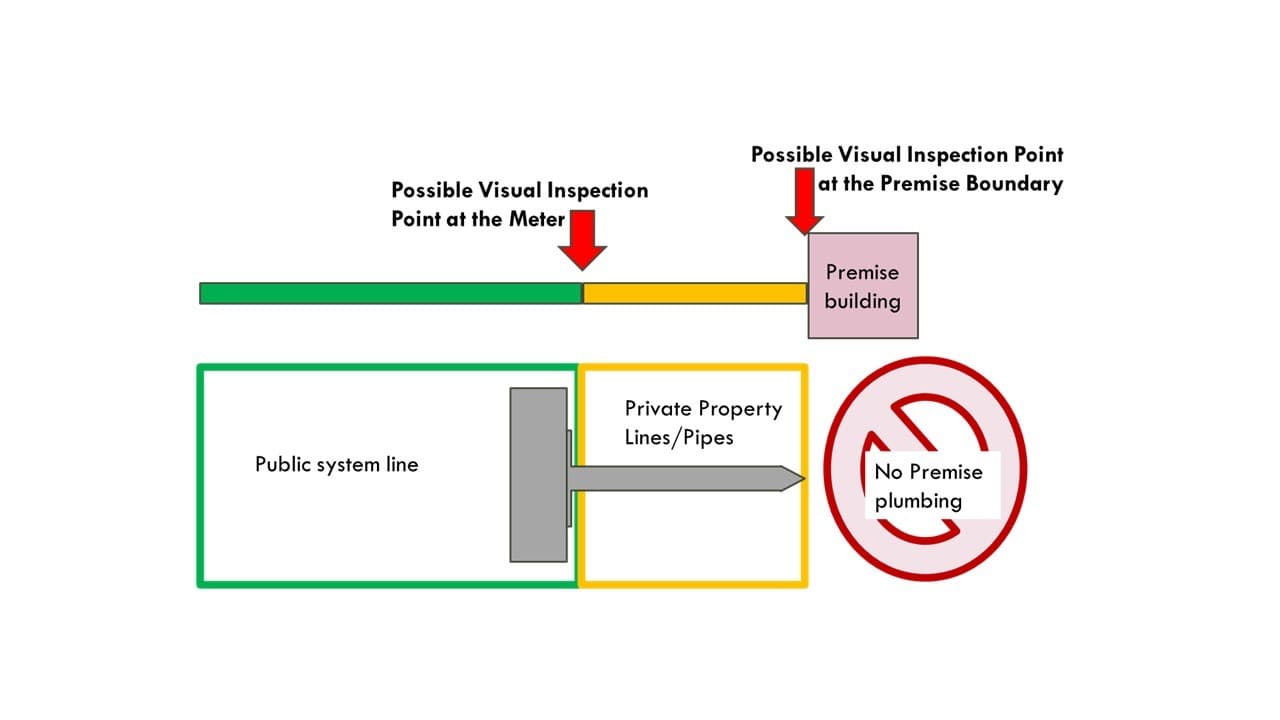
Who owns the water service lines? The water utility owns the public pipes that lead up to what the property title determines is a private water line. In New Mexico, that is usually the property line.
How to Determine Your Pipe Material
Homes built before 1987 might have lead plumbing. You can search the county assessor's office records to determine your home's build date.
You may access this video guide on how to determine service line material in your premise: watch the video guide.
- Determine when your home was built and write it down in the survey.
- Locate where your water pipe enters your building. The incoming water service may come up from the basement floor or out of a basement wall. If you have a crawlspace, it will come out of the floor. If your house is on a slab, it will come up through the main floor, typically in a utility closet.
- Do a scratch test on the water pipe you have identified.
- Use a key or coin to scratch the pipe close to where it enters the house through the wall or floor.
- If the pipe is painted, gently sand or scrape the paint away to expose the material.
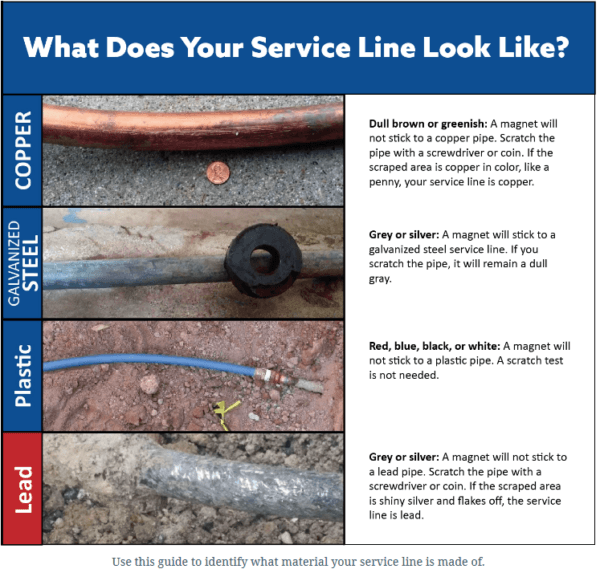
- If it is shiny and orange like a penny, you have a copper service line.
- If the pipe is grey, you may have a lead service line and should continue to part 4.
- If the pipe is any other color, continue to part 4.
- Do a magnet test.
- If a magnet will stick, you have a steel service line.
- If you have a red, blue, black, or white pipe and the magnet will not stick, you have a plastic service line.
- If a magnet won't stick, and it is not obviously plastic, you may have a lead service line.
- If you are unable to use the above methods to determine the pipe material, here are some alternatives:
- Purchase an EPA-recognized lead swab kit online or at a home improvement store. These kits test the pipe material, not the water inside the pipes. Provide pictures of the plumbing line tested and color change results to SPUC.
- Ask a licensed plumber to inspect your pipes and determine the material type. Provide a copy of the inspection report to SPUC.
If the pipe reveals a dull silver-gray color when scratched, and it is not magnetic, the pipe is likely made of lead.
Additional Information
Please visit the following websites for information on lead exposure:
- New Mexico Environmental Department, Drinking Water Bureau: https://www.env.nm.gov/drinking_water/lead-and-copper-program/
- Environmental Protection Agency: https://www.epa.gov/lead
- Lead & Copper Public Education Material
Submit the Survey
Once you have identified your pipe material, tell us what you found. If you could not identify it, choose “Unable to determine” — that is still useful to us.